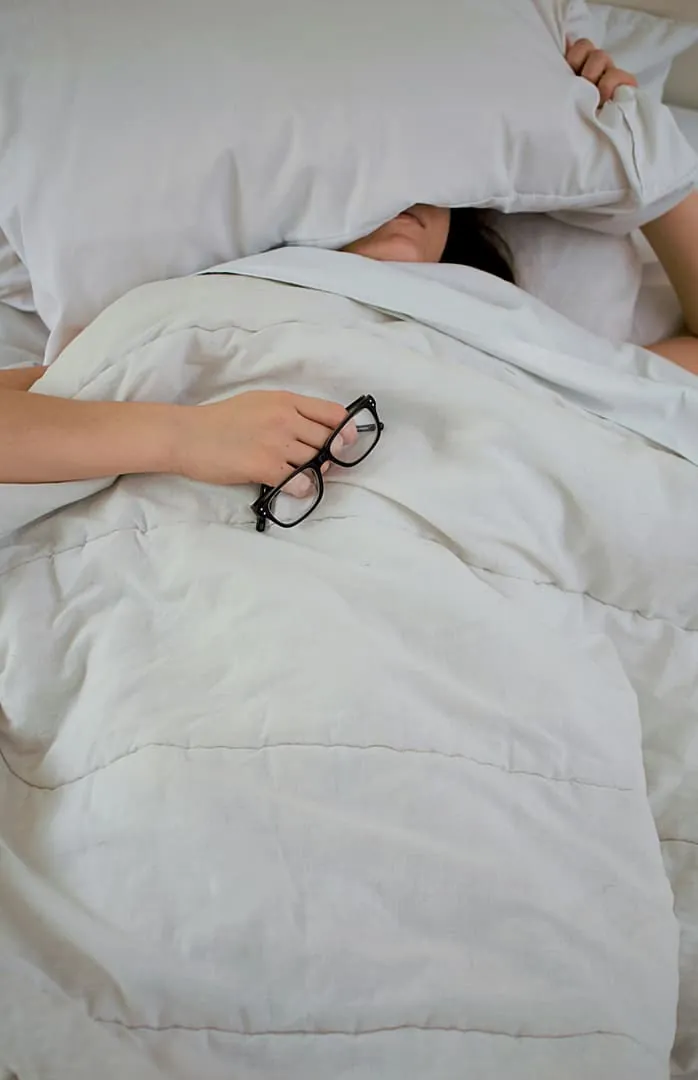
Why Everyone Sleeps Worse Right Before Christmas — And How to Fix It Naturally
Every December, the same strange paradox returns. People feel exhausted, yet sleep becomes lighter, shorter and more fragmented. Falling asleep takes longer. Night awakenings multiply. Mornings feel heavier. This is not coincidence — and it’s not failure. Across Europe, sleep quality consistently drops in the days leading up to Christmas. Even people who usually sleep well report restless nights, vivid dreams and early waking. The closer December 24 gets, the worse it often becomes. This article explains why pre-Christmas sleep disruption is so common, why it affects almost everyone regardless of lifestyle, and how to restore better sleep without supplements, guilt or drastic routines.
1. Why sleep gets worse right before Christmas
Sleep is deeply linked to rhythm and predictability. Christmas quietly disrupts both.
In the weeks before the holidays, daily routines start to unravel. Evenings become longer. Light exposure increases. Meals shift later. Social obligations accumulate. Mental load builds quietly in the background.
The brain interprets this as a period of anticipation. Anticipation, even when positive, activates the nervous system. Cortisol rises, melatonin production becomes less regular, and the body stays alert longer than it should.
2. December routines unravel without us noticing
On paper, many people keep the same official schedule in December: same job, same commute, same wake-up time. But evenings change.
There are office parties, school events, late-night online shopping, long calls with family and last-minute planning. Dinner slips from 19:30 to 20:30, then to 21:00. Bedtime moves with it.
The brain, which loves predictability, receives a mixed signal: “normal workday” plus “exception season”. This tension makes it harder to wind down, even when you feel exhausted.
3. Light, screens and Christmas ambience delay sleep
Another major factor is light. December evenings are filled with artificial illumination: decorative lights, glowing trees, bright screens, warm indoor lighting and late-night scrolling.
Visually, this is comforting. Biologically, it sends a “daytime” signal to the brain. Extended light exposure — especially from LED fairy lights, televisions and phones — delays the body’s natural signal to prepare for sleep.
If you have already explored our guides on winter lighting resets, you know that light timing matters as much as light intensity. Before Christmas, both often drift in the wrong direction.
4. The hidden December stress load
Stress also plays a unique role before Christmas. Unlike acute stress, which is sharp and obvious, pre-holiday stress is low-grade and continuous.
It includes unfinished tasks, budget questions, travel logistics, family dynamics and expectations you put on yourself. Very few of these generate a single dramatic moment — instead, they accumulate.
The brain keeps processing this background load even at night. That is why you may wake at 3 a.m. thinking about a forgotten email, a gift, or whether everyone will get along at dinner.
If you have already experimented with greener stress routines from our guide on reducing stress with green habits, you have felt how small daily choices can calm the nervous system. The same logic applies in December — only the volume of inputs is higher.
5. When winter evenings suddenly speed up again
All season long, winter evenings naturally slow down. Across Europe, people stay home more, move less after dark and maintain calmer rhythms. Then, just before Christmas, evenings accelerate again.
Late meals, heavy festive food, sugar, chocolate, caffeine and alcohol all concentrate into the same few weeks. Social media becomes noisier. Notifications multiply.
Physically, rich and late meals interfere with deep sleep cycles. Alcohol may help some people fall asleep faster, but it fragments the night and reduces restorative stages. Combined with already fragile routines, this creates exactly the kind of sleep that feels “light but tiring”.
Articles like our piece on winter food that warms without overheating homes show how evening choices shape both energy bills and bodily comfort. Before Christmas, this link becomes especially visible.
6. Overheated bedrooms and dry air reduce sleep quality
Temperature also plays its part. In many European homes, living rooms and bedrooms run hotter in the days before Christmas. Guests are expected, children go to bed later, and nobody wants to feel cold while wrapping gifts.
Yet overheated rooms, especially above 19–20 °C, often reduce sleep quality. The body needs to cool slightly to fall asleep and stay asleep. A too-warm bedroom creates more tossing, turning and surface-level sleep.
Dry indoor air from constant heating further irritates airways and contributes to lighter, more fragmented rest. Our analysis of why European homes feel colder than they used to shows how perception of warmth is more complex than thermostat numbers.
7. The good news: pre-Christmas insomnia is situational
The most important reassurance is this: this form of sleep disruption is situational, not a permanent disorder.
In other words, your body is not “broken”. It is reacting to a specific combination of signals — disrupted routines, excess light, richer food, emotional anticipation and social pressure.
Because the causes are contextual, they usually respond well to gentle adjustments. Most people notice that once Christmas has passed and evenings calm down, sleep quality improves again without dramatic intervention.
8. Gentle evening resets that actually help
Restoring sleep before Christmas is not about rigid routines. It is about sending clear signals of safety and closure to the nervous system.
Small changes have a disproportionate effect:
- dimming lights 30–60 minutes earlier
- ending screens sooner or charging phones outside the bedroom
- eating slightly earlier and keeping the heaviest food at lunch rather than dinner
- reducing alcohol on the evenings when you most need real rest
- lowering bedroom temperature while improving bedding and layers
Warmth still matters — but not excess heat. A cooler bedroom with appropriate layers and cosy indoor clothing, as explored in our guide on winter layering science, supports deeper rest than a hot, dry room.
9. Letting go of sleep perfectionism
Psychologically, giving yourself permission to sleep imperfectly is crucial. Anxiety about sleep often does more damage than a few short nights.
Accepting that sleep may be lighter or shorter in the final days before Christmas removes a layer of pressure. Many people find that once they stop tracking every minute of rest, they actually fall asleep faster.
Across Europe, people who consciously slow their evenings in the last days before Christmas — lowering light, protecting a calm final hour, keeping expectations realistic — report noticeably better sleep, even while stress remains.
10. Build your winter sleep and comfort cluster
If this article resonates with you, you may also find these pieces helpful:
- New winter evenings: why Europe slows down after 6 p.m.
- Europe’s winter light reset: smarter lighting for comfort and energy
- The rise of the 15 °C home: Europe’s winter heating shift
- Reducing stress with green routines
- Autumn immunity: natural ways to support your body
Together, they form a practical toolkit for winter: calmer evenings, smarter lighting, better clothing, more supportive food and gentler daily rhythms.
Frequently Asked Questions
Is it normal to sleep badly before Christmas?
Yes. Anticipation, light exposure, routine changes and stress disrupt sleep temporarily for most people.
How long does this phase usually last?
For most households, disturbed sleep peaks in the 3–7 days leading up to December 24, then gradually improves once obligations drop.
What should I prioritise if I can only change one thing?
Focus on a calmer last hour before bed: dimmer light, fewer screens and a realistic bedtime that you can keep most nights.
Conclusion: Sleeping poorly before Christmas is not a personal failure — it is a seasonal response. By understanding what disrupts sleep during this period and responding with gentler evenings, softer light and realistic expectations, rest naturally returns. Sometimes, the best way to sleep better is not to try harder — but to slow down.
About the author:
Julien Maurice is the founder of AdminLanding and writes the editorial guides on GreenDailyFix covering French renovation aid, energy policy, and the administrative side of the energy transition. Contact: [email protected]
Related posts
Most People Aren’t Failing at Sustainable Living — They’re Just Optimising the Wrong Things
If sustainable living feels harder than it should, there’s a reason — and it has nothing to do with laziness or lack of care. In 2026, many people aren’t doing too little for the planet. They’re simply spending their energy on choices that barely move the needle.
If You Want to Live More Sustainably in 2026, Stop Doing More — Start Choosing What to Ignore
After years of advice telling us to optimise everything, many people reach the same conclusion: sustainable living feels like constant self-surveillance. In 2026, the most effective green shift is not about adding new rules, but about consciously deciding what no longer deserves your energy.
Why Sustainable Living Feels Exhausting - And How to Build a Green Life You Can Actually Maintain
Many people do not quit sustainable living because they do not care. They quit because it is exhausting. Too many rules. Too many contradictions. Too much pressure to do everything right, all the time. In 2026, this quiet fatigue has a name - and it is one of the biggest obstacles to real environmental progress.

Your Laundry Might Be Polluting More Than Your Car: The Microplastic Problem at Home
Every time you wash your clothes, thousands of microscopic plastic fibres are released into water systems. In 2026, scientists agree: laundry is one of the largest sources of microplastic pollution — and it happens quietly, at home.