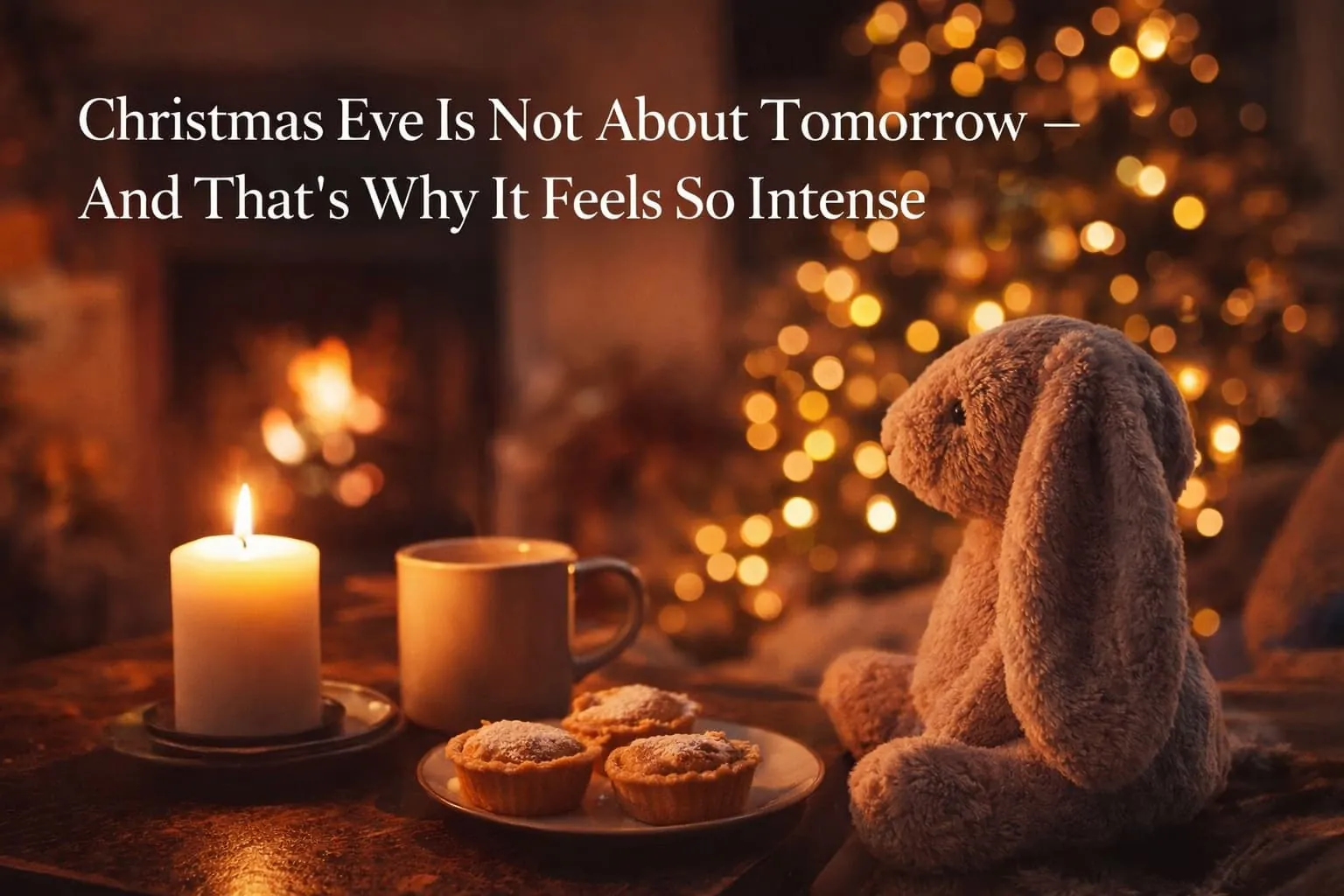
Christmas Eve Is Not About Tomorrow — And That’s Why It Feels So Intense
Christmas Eve carries a strange emotional weight. It is not the celebration itself, nor the gifts, nor even the meal. It is the waiting. Across Europe, December 24 feels quieter, heavier, and more reflective than any other day of the year.
1. Christmas Eve between effort and release
Christmas Eve sits between effort and release. After weeks of preparation, nothing more can be done — yet the celebration has not begun. The brain struggles with unfinished transitions, which is why emotions rise: nostalgia, fatigue, reflection.
Physiologically, stress hormones begin to drop. The nervous system downshifts, creating space for feelings usually kept at bay. This is why Christmas Eve often feels heavier than Christmas Day itself.
Homes reflect this shift. Lights soften. Movements slow. Even in busy households, there is an instinct to protect the moment. Silence feels louder, and that silence is meaningful.
2. A simpler way to experience December 24
Trying to optimise Christmas Eve often backfires. The evening feels best when it is allowed to be simple: a quiet meal, familiar objects, low light, early rest. Christmas Eve is not about what comes next — it is about what is ending.
The gift of Christmas Eve is closure. It closes the rush, the year, the effort. When allowed to pass gently, it prepares the ground for joy rather than forcing it.
3. Related readings to soften winter evenings
If you enjoy this more reflective approach to winter evenings, you might also like:
Frequently Asked Questions
Why does Christmas Eve feel more emotional than Christmas Day?
Because it represents a transition between effort and celebration, triggering emotional release.
Conclusion: Christmas Eve is not meant to be filled — it is meant to be felt. When we stop trying to perfect it, it gives us something rare: a quiet ending before joy begins.
About the author:
Julien is a French sustainability enthusiast sharing practical tips for greener living. With years of experience in energy efficiency consulting, he helps households reduce their environmental impact without sacrificing comfort. Contact: info@greendailyfix.com
Related posts
Most People Aren’t Failing at Sustainable Living — They’re Just Optimising the Wrong Things
If sustainable living feels harder than it should, there’s a reason — and it has nothing to do with laziness or lack of care. In 2026, many people aren’t doing too little for the planet. They’re simply spending their energy on choices that barely move the needle.
If You Want to Live More Sustainably in 2026, Stop Doing More — Start Choosing What to Ignore
After years of advice telling us to optimise everything, many people reach the same conclusion: sustainable living feels like constant self-surveillance. In 2026, the most effective green shift is not about adding new rules, but about consciously deciding what no longer deserves your energy.
Why Sustainable Living Feels Exhausting - And How to Build a Green Life You Can Actually Maintain
Many people do not quit sustainable living because they do not care. They quit because it is exhausting. Too many rules. Too many contradictions. Too much pressure to do everything right, all the time. In 2026, this quiet fatigue has a name - and it is one of the biggest obstacles to real environmental progress.

Your Laundry Might Be Polluting More Than Your Car: The Microplastic Problem at Home
Every time you wash your clothes, thousands of microscopic plastic fibres are released into water systems. In 2026, scientists agree: laundry is one of the largest sources of microplastic pollution — and it happens quietly, at home.