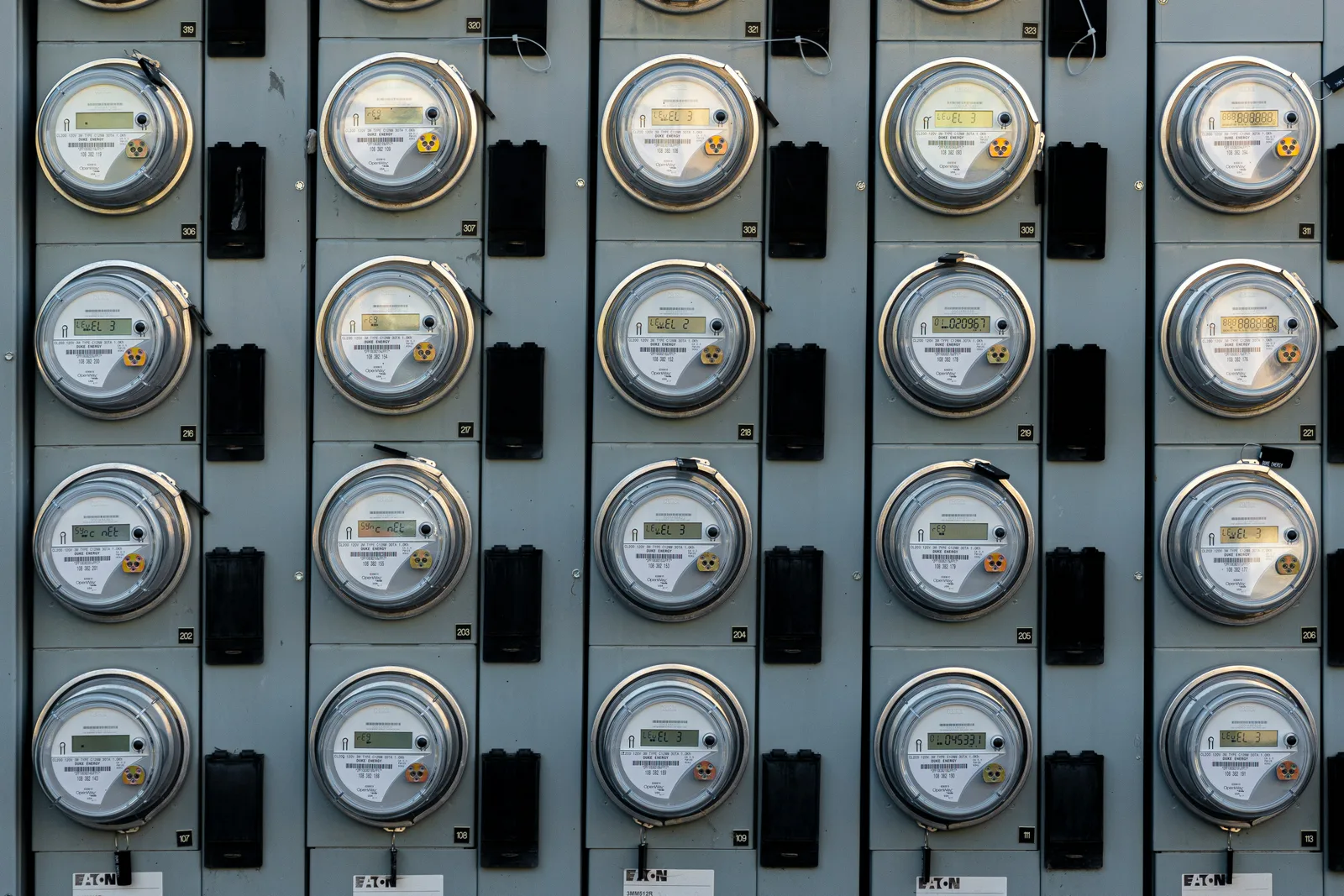
France DPE 2026: New Electricity Coefficient (1.9 vs 2.3) — Who Gains a Class Without Works?
Monday evening, 10pm. You own an electric-heated 60 m² flat in France, currently rated F on the 2022 [DPE](/en/blog/2026-04-26-dpe-diagnostic-performance-energetique-2026) — rent frozen for three years, tenant moving out end of June. Your flat may have just moved up to class E without a single wall changing. The conversion coefficient for electricity in the French DPE calculation dropped from 2.3 to 1.9 on 1 January 2026. The change is regulatory, silent, and most landlords don't realise it applies to their existing DPE — no new diagnostic needed. This guide walks through what changed, the math you can run on your current DPE, how to download the corrected ADEME certificate, and the cases where nothing changes (gas, oil, hybrid heating). The calculation is short: three multiplications, ten minutes. The consequence on lease terms, rent ceilings and the 2028 letting ban can run into thousands of euros.
1. Who this guide is for
This article is written for individual landlords owning a property heated entirely or mainly by electricity, currently rated D, E, F or G on the DPE, who are about to renew a lease, sell, or negotiate with a tenant. It is mostly relevant to landlords whose property sits in a configuration where the coefficient flips the class: - Pre-2000 flats, small surfaces, in collective buildings, with electric convector heating and an electric water heater. This is where the effect is most visible. - Cross-border and expat landlords owning a French rental and following French regulation from abroad — the coefficient change has barely been relayed outside specialised press. - Owner-occupiers renting a furnished room or a classified seasonal furnished property: the DPE class affects the right to rent, the rent level in tense zones, and certain tourist-classification statuses. It does not cover homes heated by gas, oil, wood, district heating or [heat pump](/en/blog/2025-09-21-heat-pumps-france): for these energies the EP/EF conversion coefficient was not modified on 1 January 2026 and the DPE class does not move mechanically. It also does not cover collective building DPEs (specific co-ownership rules) or commercial property DPEs (different method).
2. What exactly changed on 1 January 2026
The DPE (energy performance diagnostic) classes a property in seven letters (A to G) on two indicators: primary-energy consumption (kWh EP/m²/year) and greenhouse gas emissions (kg CO₂eq/m²/year). The final class is the worse of the two. For an all-electric home, the primary-energy indicator almost always sets the cap. Primary-energy consumption is calculated from final consumption (kWh actually consumed at the meter, calculated conventionally by the 3CL-2021 method), multiplied by an EP/EF conversion coefficient specific to each energy source. Under the post-2021 method (Climate and Resilience law, 22 August 2021), the coefficient for electricity had been set at 2.3 (down from 2.58). The **arrêté du 13 août 2025** (JO 26 August 2025) lowered this coefficient to 1.9 with effect from 1 January 2026, aligning with the European default value and reflecting the decarbonisation of the French electricity mix. Other coefficients (natural gas at 1, oil at 1, wood at 0.6, district heating variable) remain unchanged. In practice: for the same final electricity consumption, the calculated primary consumption falls by 17.4% ((2.3 - 1.9) ÷ 2.3). On a property in the middle of a class band (e.g. 380 kWh EP/m²/year, in F), this can be enough to drop into the next band (E starts at 330 kWh EP/m²/year). The change applies to your existing DPE, no new diagnostic needed. ADEME has published a rectifying-certificate procedure for DPEs in current validity — see section 4.
3. Worked example: an electric-heated 60 m² flat in Annecy
Mrs Lemaire owns a 60 m² T3 in Annecy, building from 1978, average insulation, double glazing, electric convector heating, electric water heater. Her 2022 DPE shows 10 000 kWh ef/year (final-energy consumption, conventional 5 regulated uses). With the old coefficient (2.3): - Primary energy: 10 000 × 2.3 = 23 000 kWh EP/year - Per m²: 23 000 ÷ 60 = 383 kWh EP/m²/year - Class: F (band F runs 331 to 420) - Consequence: rent freeze since 2023, and letting ban from January 2028. With the new coefficient (1.9), same final consumption: - Primary energy: 10 000 × 1.9 = 19 000 kWh EP/year - Per m²: 19 000 ÷ 60 = 317 kWh EP/m²/year - Class: E (band E runs 251 to 330) - Consequence: rent freeze lifts, IRL-indexed increase available at next renewal (within local rent caps), and the 2028 ban no longer applies (class E is not affected by any letting ban before 2034). For Mrs Lemaire, on a €750/month rent re-indexed at next IRL +3%, that is roughly €270 per year recovered in year one — and again every following year, before further revisions. No works. No new diagnostic. The math took ten minutes.
4. Do you need a new DPE? How to get the corrected ADEME certificate
No, you do not need a new DPE — and this is the main source of confusion. Your current DPE is valid for 10 years (subject to transition rules for diagnostics issued before July 2021). The calculation method changed by decree, and ADEME provides a free rectifying certificate through the Observatoire DPE-Audit. Step-by-step procedure for the 2026 certificate: 1. Find your DPE number (13 digits, top right of the document). If lost, the diagnostician who issued it or the notary at purchase can resend it. 2. Go to the Observatoire DPE-Audit ADEME and enter the DPE number in the search tool. 3. If the new class (auto-calculated with coefficient 1.9) is better than the old one, a download button for the 2026 rectifying certificate appears. The document is an official PDF digitally signed by ADEME. 4. Attach the certificate to the rental file (DDT — diagnostics technical file) at lease renewal, sale, or new listing. The certificate has the same legal value as a corrected DPE. If the new class is identical, no certificate is generated — your existing DPE is enough. If it is worse (rare but possible when the coefficient effect is offset by a GHG re-calculation), the old DPE remains valid until expiry — no obligation to update unfavourably. To check in seconds whether your property gains a class, AdminLanding's DPE 2026 tool runs the math from your existing DPE and tells you whether an ADEME rectifying certificate is available — free, no account required for the check.
5. When the change does not help (or barely)
Several cases where the new coefficient changes nothing in practice: Non-electric heating. Gas, oil, wood, district heating: the coefficient applicable to your main energy is unchanged. The DPE class does not move. Same for a heat pump: it consumes electricity, but the COP already cuts final consumption hard — the proportional effect of moving to 1.9 is small and almost never flips a class. Properties mid-band. The coefficient only flips a class when you were close to the upper threshold of your band. A property at 350 kWh EP/m²/year (heart of F) goes to 290 (heart of E) — class moves. A property at 280 (already E) goes to 231: that is in band D (181–250). The exact effect depends on the closest threshold. Run the math first. GHG-bound DPE. The final DPE class is the worse of the EP indicator and the GHG indicator. If your property is capped by GHG emissions (typical for oil heating), improving EP via the new coefficient will not move the final class. You stay on the GHG class, which is unchanged. Pre-July 2021 DPEs. DPEs issued before the 3CL-2021 reform follow a different method, already invalidated for F/G properties since 1 January 2025. If your DPE is older than 2018, it has likely already expired — a new diagnostic is required before the next letting anyway. Rent caps in tense zones (Paris, Lille, etc.). Moving from F to E lifts the freeze, but the class is still a factor in the loyer de référence majoré in some cities. Check the local schedule before raising.
6. 2026 action calendar for a landlord
If you self-manage an electric-heated property in class D, E, F or G, here is the sequence to follow this week and this month. This week. Pull out your current DPE. Note the 13-digit number. If your property sits mid- or upper-band (e.g. above the middle of F), go to the Observatoire DPE-Audit ADEME and download the rectifying certificate if it exists. Cost: €0. Time: 15 minutes. Before the next lease signature. Attach the rectifying certificate to the DDT. If the new class lifts the rent freeze (F to E), recalculate the IRL increase and prepare the revision within local rent-cap limits — Paris, Lille, Lyon, Bordeaux, Montpellier and several other cities have their own ceilings. In non-tense zones, the revision is free within the IRL. At lease renewal. Update the lease template with the new DPE class and the reference DPE (number + emission date + rectifying certificate attached). If the rent revision follows the freeze lift, state it explicitly in the addendum or the new lease. Keep a copy of the corrected DPE for the rental period plus 6 years. Before the 2026 tax declaration. No direct effect on rental income declaration (DPE class is not declared), but the doubled déficit foncier ceiling at €21 400 for energy works applies to works that move the property out of E, F or G. See the 2026 rental income declaration guide for trade-offs before the 21 May 2026 deadline. Before 2028. If your property stays in class F after the new coefficient, plan insulation and heating works now. The letting ban for class F kicks in January 2028. With quote, RGE certification and installation lead times of 6–9 months in 2026, the window is closing.
7. Tools, sources and support
To skip the decree reading and the paper math: Official ADEME observatory — observatoire-dpe-audit.ademe.fr. The official source to retrieve a DPE by number, check the rectified class, download certificates, and consult diagnostic history. For landlords with 2, 3 or more properties tracking lease renewals, DPE expiry, and overall compliance (smoke detector, inventory, PNO/GLI insurance certificates) on a single screen, AdminLanding's Rental Pack (first property free — 10 documents included, no card required; then €49 per property for 50 documents, €39 each additional, one-off — no subscription) provides a per-property dashboard with compliance chips. ALUR lease drafting, digital inventory, rent receipts, eIDAS e-signature, plus compliance & maintenance deadline tracking (boiler, chimney sweep, heat-pump/AC, gas & electrical checks, DPE, septic tank) with email reminders — the whole rental flow is included. See rental features for the detail. For the tax-side complement — déficit foncier, energy-works deductions, micro-foncier vs régime réel — see the full 2026 rental-income declaration guide and the general 2026 DPE guide, which covers the full method without focusing on the coefficient.
Conclusion: The shift from 2.3 to 1.9 for electricity is one of those regulatory updates that does not show up, does not get announced, and yet changes a rental property's trajectory over ten years. An electric-heated F flat that moves up to E recovers several hundred euros of yearly rent and exits the 2028 letting ban — no quote, no contractor, no MaPrimeRénov' file. The only work to do is the verification: pull out the DPE, run the division, download the certificate. Fifteen minutes, and an up-to-date file for the next lease.
Frequently asked questions
Does the new coefficient apply automatically to my existing DPE?
Yes. Since 1 January 2026, the 1.9 coefficient (down from 2.3) applies to the primary-energy calculation of every DPE in current validity, with no new diagnostic. ADEME automatically issues a downloadable rectifying certificate when the class improves, via the official Observatoire DPE-Audit.
Do I need to commission a new DPE to benefit from the new coefficient?
No. Your existing DPE remains valid for 10 years from issue. The calculation method changes by decree and ADEME provides a free rectifying certificate. Ordering a new diagnostic (€150–€250) changes nothing — unless you are anyway planning a sale or renovation and the current DPE is about to expire.
Is my gas-heated property affected by the new coefficient?
No. The EP/EF conversion coefficient for natural gas remains at 1, and oil too. Only electricity drops from 2.3 to 1.9. For gas, oil, wood or district-heated properties, the DPE class is not mechanically affected. A heat pump uses electricity but the effect is marginal because the COP already reduces final consumption.
Does the new coefficient lift a property out of class G?
Rarely. The coefficient cuts primary energy by 17.4% for electricity, so a property at 500 kWh EP/m²/year (in G, which starts at 421) drops to about 413 — still G. Only G properties at the bottom of the band (around 425–460 kWh EP/m²/year) can move up to F. For others, works are still required.
What is the 2026 ADEME certificate and how do I get it?
An official PDF, digitally signed by ADEME, confirming the new DPE class recalculated with coefficient 1.9. Free download from observatoire-dpe-audit.ademe.fr after entering the 13-digit DPE number. If the class does not change, no certificate is generated and the existing DPE is sufficient.
Does the current lease change automatically with the new class?
No, the signed lease stays as is. But the recalculated class applies for future obligations: the rent freeze lifts if you move from F to E, and an IRL-indexed rise becomes available at the next anniversary, within local rent caps. At the next lease signature, attach the rectifying certificate to the DDT (diagnostic file).
Does the new coefficient change Paris rent caps?
Paris (and other tense-zone) rent caps remain based on reference rents per DPE class. A class F→E move can change the applicable rent ceiling, but the effect depends on the OLAP schedule for Paris or the prefectural schedule elsewhere. Check the loyer de référence majoré specific to your district before raising.
About the author:
Julien Maurice is the founder of AdminLanding and writes the editorial guides on GreenDailyFix covering French renovation aid, energy policy, and the administrative side of the energy transition. Contact: [email protected]
Related posts

DPE Energy Ratings and Your French Rental: The 2026 Letting Bans, Explained
By mid-2026, a French home's DPE letter is no longer a detail on the listing — it decides whether the home may legally be rented at all. Class G has been banned from new lettings since January 2025, F and G rents are frozen, and the loi Le Meur has now closed the short-term escape route by attaching an energy floor to tourist lets too. If you own (or rent) a lettable home in France, this is the July 2026 state of play: what is already banned, what gets banned next, and what an owner of an F or G home can realistically still do.

Renting an Energy Sieve? Your Rights in 2026: Rent Freeze, DPE G Ban, and How Fast You Can Leave
A flat that never gets warm, radiators running flat out, and an electricity bill that hurts more than the rent: living in a passoire thermique (energy sieve) is a daily tax on comfort. But in 2026 the law is firmly on the tenant's side — twice. If you stay, the rent of an F- or G-rated home is frozen and class G has been banned from new leases since 2025. If you decide to leave, the notice rules (préavis) are more favourable than most people think — often 1 month instead of 3 — provided you claim the reduction correctly, send the letter the right way and count the dates the way the law does. This guide covers both halves: your rights while you stay, and the exact mechanics of leaving, including the zone tendue subtlety that most websites get wrong.
Meublé de tourisme: DPE and energy rules in 2026 (loi Le Meur)
If you let a property short-term in France, 2026 is the year energy performance catches up with you. The loi n°2024-1039 du 19 novembre 2024 — the loi Le Meur — pulls meublés de tourisme (furnished tourist rentals) into the same décence énergétique logic that already governs long-term lets. In communes that regulate change of use, a DPE now conditions the right to rent; class F and G properties are being pushed out; and from 1 January 2034 every tourist let that is not the owner's principal residence must reach class D. On top of that, registration has gone national — the State teleservice is in force since 20 May 2026 — and the taxe de séjour still applies. This guide sets out exactly what the law requires, the dates that matter, which properties are exempt, and how to plan renovations before a deadline — or a fine — forces your hand.
Éco-PTZ for landlords: financing a rental renovation at zero interest in 2026
For a French landlord, a rental rated F or G on the DPE is now a countdown, not just a comfort problem. From 1 January 2025 the most energy-hungry homes can no longer legally be rented, and F-rated flats follow in 2028. Renovating is unavoidable — the real question is how to pay for it without draining your cash. This is where the éco-prêt à taux zéro (éco-PTZ) earns its place: a state-backed, interest-free loan of up to €50,000 over 20 years, open to landlords, with no income condition. This guide walks through the 2026 ceilings, the eligible works and the RGE rule, how the éco-PTZ stacks with MaPrimeRénov and CEE on the same works, the prêt avance rénovation variant, and the tie-in with the déficit foncier and the décence énergétique deadlines. Figures are drawn from service-public.gouv.fr and France Rénov; treat this as information, not personalised advice, and confirm each figure at the source before you sign.