MaPrimeRenov 2026: Complete Guide to French Renovation Subsidies
France's main renovation subsidy is evolving again in 2026. Managed by ANAH (Agence Nationale de l'Habitat), MaPrimeRenov remains the single entry point for most household energy renovation grants. This guide covers eligibility, the application process, how to combine it with other aids, and common mistakes to avoid — all based on official ANAH and government sources.
1. What is MaPrimeRenov and who manages it?
MaPrimeRenov is France's primary financial aid for energy renovation, managed by ANAH (Agence Nationale de l'Habitat). It replaced the former CITE tax credit (Credit d'Impot pour la Transition Energetique) in January 2020 and became the single gateway for most household renovation subsidies. The program is funded by the French state and administered through the online platform maprimerenov.gouv.fr. Local France Renov advisors (formerly FAIRE) provide free guidance to applicants throughout the process. MaPrimeRenov covers two main tracks: single-measure renovations (e.g. installing a heat pump or insulating an attic) and grouped renovations (multiple works in a single project aiming for a significant energy performance improvement, typically measured by DPE class gain).
2. What changed in 2026?
The 2026 reform continues the trend toward favoring grouped renovations over single-measure works. Key directions include: - Grouped renovation bonus is increasing, incentivizing homeowners to combine insulation + heating replacement in one project - Single-measure grants for higher-income households are being reduced - RGE installer verification is being strengthened with more audits and stricter certification renewal requirements - DPE alignment — the program is increasingly tied to measurable DPE class improvements Specific grant amounts and income thresholds are updated annually by ANAH decree. Always check the current rates on the official simulator at maprimerenov.gouv.fr before starting your project.
3. Who is eligible?
MaPrimeRenov eligibility is based on several criteria defined by ANAH: - Property owners — both owner-occupiers and landlords can apply. Tenants cannot apply directly. - Primary residence — the property must be occupied as a primary residence (or rented as such by a landlord). Second homes are not eligible. - Property age — the property must be at least 15 years old (reduced to 2 years when replacing an oil or gas boiler). - RGE installer — all work must be performed by a professional certified RGE (Reconnu Garant de l'Environnement). Check certifications at france-renov.gouv.fr. - Income-based — grant amounts vary by household income category. There are four categories (from lowest to highest income): Bleu, Jaune, Violet, and Rose. Thresholds differ between Ile-de-France and the rest of France. Non-French citizens who own property in France are eligible on the same terms as French nationals.
4. Income categories overview
ANAH classifies households into four income categories that determine the grant amount: - Bleu (very modest income) — highest grant amounts - Jaune (modest income) — high grant amounts - Violet (intermediate income) — moderate grant amounts - Rose (higher income) — lower grant amounts, primarily for grouped renovations The income reference used is the revenu fiscal de reference from your latest avis d'imposition. Thresholds depend on the number of people in the household and whether the property is in Ile-de-France or elsewhere in France. Since these thresholds are updated annually by ANAH decree, check the current figures on the official simulator at maprimerenov.gouv.fr. Do not rely on outdated tables from previous years.
5. Eligible renovation works
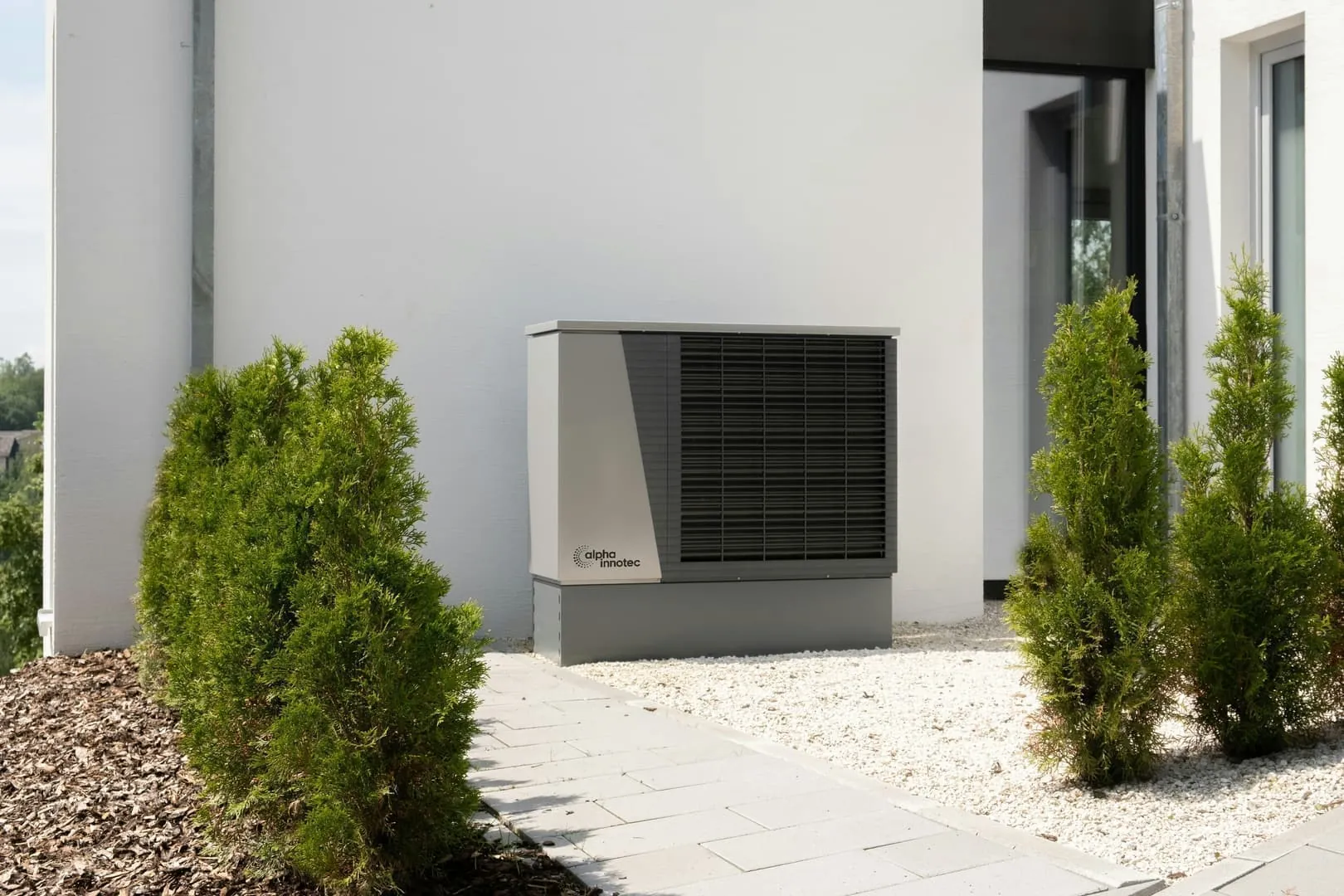
MaPrimeRenov covers a wide range of energy renovation works: Heating system replacement - Air-to-water heat pumps (see our breakdown of heat pump installation costs 2026) - Geothermal heat pumps - Biomass boilers (wood pellet, log) - Solar water heaters Insulation - Roof and attic insulation - External wall insulation (ITE) - Internal wall insulation (ITI) - Floor insulation Windows and ventilation - Double or triple glazing (replacing single-glazed windows) - VMC double flux (mechanical ventilation with heat recovery) Other - Professional energy audit (mandatory for grouped renovations) - Connection to a district heating network Air-to-air heat pumps (reversible units) are NOT eligible for MaPrimeRenov, though they may qualify for CEE (Certificats d'Economies d'Energie).
6. How to apply: step by step
The application process follows a strict sequence. Starting work before receiving confirmation will disqualify your application. Step 1: Check eligibility. Use the official simulator at maprimerenov.gouv.fr with your revenu fiscal de reference. Step 2: Get quotes from RGE-certified professionals. Request at least 2 quotes. Verify RGE certifications at france-renov.gouv.fr or annuaire.qualit-enr.org. Step 3: Create your account and submit online. Upload your avis d'imposition, quotes, property ownership proof, and ID document. For co-owned properties, include the copropriety agreement. Step 4: Wait for confirmation. Processing typically takes 2-4 weeks. Do NOT start work before receiving the confirmation email. Step 5: Complete the renovation. Have the RGE professional complete the work exactly as quoted. Step 6: Upload invoices. Submit the final invoices on your MaPrimeRenov account. Step 7: Receive payment. ANAH typically processes payments within 2-4 months after invoice submission. If you need help with the administrative correspondence — letters to ANAH, your tax office, or local authorities — <a href="https://www.adminlanding.com/maprimerenov-en?utm_source=greendailyfix&utm_medium=blog&utm_campaign=renovation&utm_content=2026-04-11-maprimerenov-2026-complete-guide" target="_blank" rel="noopener noreferrer">AdminLanding's MaPrimeRénov toolkit</a> provides official letter templates for the most common MaPrimeRenov administrative steps. On mobile, <a href="https://play.google.com/store/apps/details?id=com.adminlanding.admi&hl=en&referrer=utm_source%3Dgreendailyfix%26utm_medium%3Dblog%26utm_campaign%3Dguide-android%26utm_content%3D2026-04-11-maprimerenov-2026-complete-guide" target="_blank" rel="noopener noreferrer">Guide: Démarches en France on Google Play</a> includes a 560-sheet Admin Intelligence library covering French administrative law around renovation subsidies and related procedures — useful for preparing your application before you visit maprimerenov.gouv.fr.
7. Combining MaPrimeRenov with other aids
MaPrimeRenov can be combined with several other financial aids: - Eco-PTZ (pret a taux zero) — zero-interest loan up to 50,000 euros for grouped renovations. Fully cumulative with MaPrimeRenov since 2022. - CEE (Certificats d'Economies d'Energie) — energy saving certificates provided by energy suppliers. Amounts vary by work type and energy supplier. - Local subsidies — many regions, departments, and municipalities offer additional grants. Check with your local France Renov advisor or ADIL (Agence Departementale d'Information sur le Logement). - Reduced VAT — energy renovation works benefit from a reduced 5.5% VAT rate (instead of the standard 20%). Important: The total cumulated aids cannot exceed 90% of the total project cost for Bleu and Jaune categories, or 75% for Violet and Rose categories.
8. Common rejection reasons and how to avoid them
The most common reasons MaPrimeRenov applications are rejected: 1. Starting work before confirmation — the single most common reason. Wait for the official confirmation email before any work begins. 2. Non-RGE installer — verify your installer's RGE certification is current and covers the specific type of work. 3. Incomplete file — missing tax notice, expired ID, or unsigned quotes. Double-check all documents before submission. 4. Property age — the property must be at least 15 years old (2 years for boiler replacement only). 5. Secondary residence — the property must be the primary residence of the owner or tenant. 6. Income category mismatch — using an outdated tax notice or incorrect household composition. 7. Quote not detailed enough — quotes must specify the exact equipment model, performance characteristics (COP for heat pumps, R-value for insulation), and RGE certification number. If your application is rejected, you can submit a recours gracieux to ANAH within 2 months. Include any missing documents and a detailed explanation letter.
9. Timeline: from application to payment
A typical MaPrimeRenov project timeline: - Eligibility check and quotes: 2-4 weeks (getting RGE quotes can take longer in high-demand periods) - Application processing: 2-4 weeks (longer during peak periods, typically spring) - Renovation work: 1 day to several weeks depending on scope - Invoice submission and payment: 2-4 months after submitting final invoices Total typical timeline: 3-6 months from first quote to receiving payment. Complex grouped renovations can take longer. Plan ahead — especially for heat pump installations where RGE installer availability can be limited. Starting the process in autumn for a spring installation is a common strategy.
Conclusion: MaPrimeRenov remains the most important financial lever for household energy renovation in France. Whether you are insulating your roof, replacing an old boiler with a heat pump, or planning a comprehensive renovation, the key is to plan ahead, verify RGE certifications, and never start work before receiving confirmation. For more on specific renovation topics, see our guides on heat pump subsidies in France, the 2026 renovation reform, and the EU renovation passport.
Frequently asked questions
Can non-French citizens apply for MaPrimeRenov?
Yes. MaPrimeRenov is available to all property owners in France regardless of nationality. The eligibility criteria are based on the property (age, primary residence) and income, not citizenship.
Do I need to live in the property to qualify?
Owner-occupiers must live in the property as their primary residence and occupy it within 1 year of work completion. Landlords can apply for rental properties but must commit to renting for at least 6 years at a capped rent.
How long does it take to receive the MaPrimeRenov payment?
After uploading final invoices, ANAH typically processes payments within 2 to 4 months. The total timeline from application to payment is usually 3 to 6 months.
Can I combine MaPrimeRenov with an eco-PTZ loan?
Yes. Since 2022, MaPrimeRenov is fully cumulative with the eco-PTZ zero-interest loan (up to 50,000 euros for grouped renovations). You can also combine with CEE and local subsidies.
What happens if I start work before receiving confirmation?
Your application will be automatically rejected. This is the most common reason for MaPrimeRenov rejections. Always wait for the official confirmation email from ANAH before allowing any work to begin.
About the author:
Julien Maurice is the founder of AdminLanding and writes the editorial guides on GreenDailyFix covering French renovation aid, energy policy, and the administrative side of the energy transition. Contact: [email protected]
Related posts

DPE Energy Ratings and Your French Rental: The 2026 Letting Bans, Explained
By mid-2026, a French home's DPE letter is no longer a detail on the listing — it decides whether the home may legally be rented at all. Class G has been banned from new lettings since January 2025, F and G rents are frozen, and the loi Le Meur has now closed the short-term escape route by attaching an energy floor to tourist lets too. If you own (or rent) a lettable home in France, this is the July 2026 state of play: what is already banned, what gets banned next, and what an owner of an F or G home can realistically still do.

Renting an Energy Sieve? Your Rights in 2026: Rent Freeze, DPE G Ban, and How Fast You Can Leave
A flat that never gets warm, radiators running flat out, and an electricity bill that hurts more than the rent: living in a passoire thermique (energy sieve) is a daily tax on comfort. But in 2026 the law is firmly on the tenant's side — twice. If you stay, the rent of an F- or G-rated home is frozen and class G has been banned from new leases since 2025. If you decide to leave, the notice rules (préavis) are more favourable than most people think — often 1 month instead of 3 — provided you claim the reduction correctly, send the letter the right way and count the dates the way the law does. This guide covers both halves: your rights while you stay, and the exact mechanics of leaving, including the zone tendue subtlety that most websites get wrong.
Meublé de tourisme: DPE and energy rules in 2026 (loi Le Meur)
If you let a property short-term in France, 2026 is the year energy performance catches up with you. The loi n°2024-1039 du 19 novembre 2024 — the loi Le Meur — pulls meublés de tourisme (furnished tourist rentals) into the same décence énergétique logic that already governs long-term lets. In communes that regulate change of use, a DPE now conditions the right to rent; class F and G properties are being pushed out; and from 1 January 2034 every tourist let that is not the owner's principal residence must reach class D. On top of that, registration has gone national — the State teleservice is in force since 20 May 2026 — and the taxe de séjour still applies. This guide sets out exactly what the law requires, the dates that matter, which properties are exempt, and how to plan renovations before a deadline — or a fine — forces your hand.
Éco-PTZ for landlords: financing a rental renovation at zero interest in 2026
For a French landlord, a rental rated F or G on the DPE is now a countdown, not just a comfort problem. From 1 January 2025 the most energy-hungry homes can no longer legally be rented, and F-rated flats follow in 2028. Renovating is unavoidable — the real question is how to pay for it without draining your cash. This is where the éco-prêt à taux zéro (éco-PTZ) earns its place: a state-backed, interest-free loan of up to €50,000 over 20 years, open to landlords, with no income condition. This guide walks through the 2026 ceilings, the eligible works and the RGE rule, how the éco-PTZ stacks with MaPrimeRénov and CEE on the same works, the prêt avance rénovation variant, and the tie-in with the déficit foncier and the décence énergétique deadlines. Figures are drawn from service-public.gouv.fr and France Rénov; treat this as information, not personalised advice, and confirm each figure at the source before you sign.