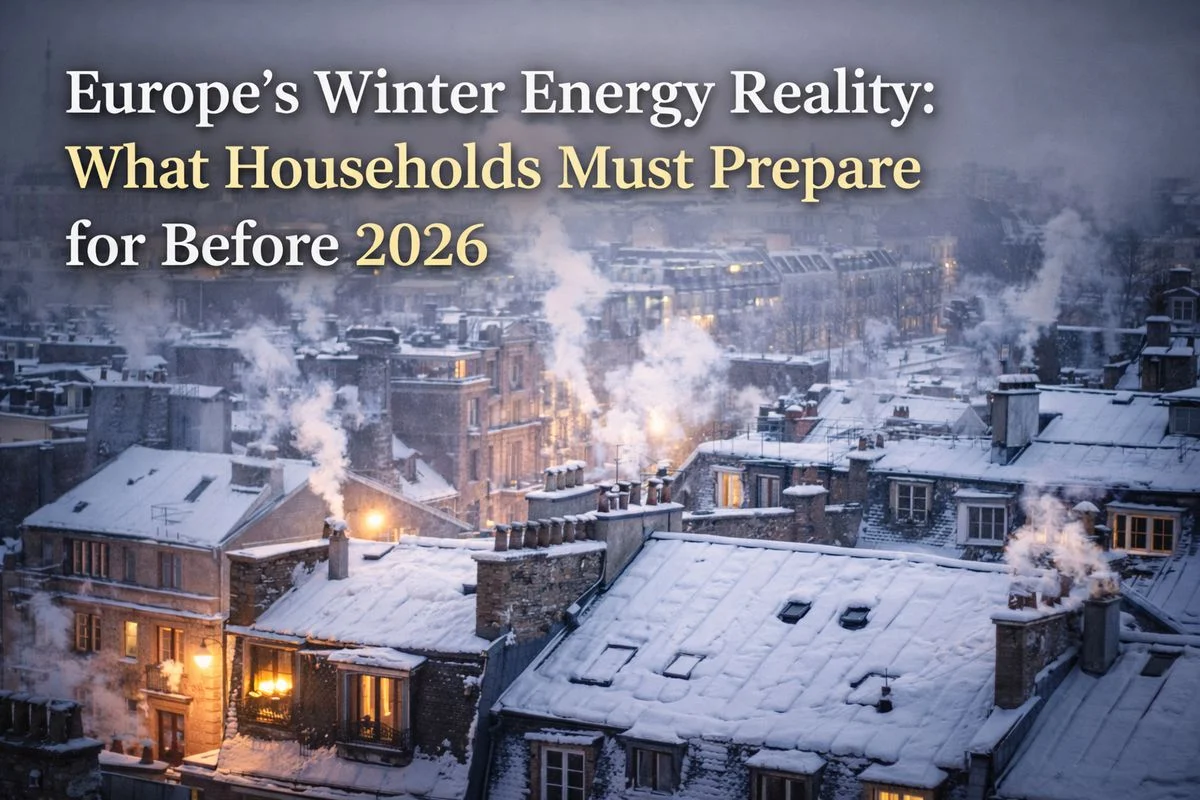
Europe’s Winter Energy Reality: What Households Must Prepare for Before 2026
Europe avoided the worst in recent winters — but the structural problems remain. As governments phase out emergency price caps and redirect budgets toward renovation instead of subsidies, households face a new question: what will winter actually look like in 2025–2026? This article explains the risks, the signals, and the smart moves households can still make.
1. Europe’s winter energy reality in 2025–2026
On the surface, Europe looks safer than it did in 2022. Gas storage is fuller, renewables cover a growing share of electricity, and energy headlines have calmed. But this apparent calm hides three facts households cannot ignore:
- emergency protections are being withdrawn
- renovation programmes are ramping up but delayed
- winter demand remains structurally high in many regions
Instead of asking “will there be blackouts?”, the better question for 2025–2026 is: who will feel the pressure first, and who will be best prepared to absorb it?
2. Why the risk has not disappeared
Gas storage levels look comfortable, but supply diversification remains fragile. Several European countries still depend on a small number of suppliers and routes. Any disruption, even temporary, can push wholesale prices up during cold spells.
At the same time, the quiet electrification of heating continues. Each new heat pump, electric radiator or fan heater adds load to winter peaks. On its own, that is not a problem — but when combined with cold, still days with low wind, grids become more stressed.
Delays to grid upgrades and interconnectors mean some regions will remain more exposed than others through 2025–2026. This asymmetry will be reflected in bills, tariffs and flexibility incentives.
3. What changes for households
The biggest shift is psychological as much as financial. During the acute crisis, households were told: your bill is shielded, the state will absorb part of the shock. In 2025–2026, that message changes.
Across Europe, governments are letting prices move more freely again. Temporary caps, rebates and exceptional checks are being reduced or targeted more narrowly. The idea is simple: public money should not indefinitely subsidise consumption, but help reduce structural demand instead.
For households, this means:
- more visible bill fluctuations, month to month and winter to winter
- higher exposure for homes with poor insulation or outdated heating systems
- more incentives, but also more pressure, to renovate or adjust habits
4. Why renovation timing matters
Renovation delays are now one of the biggest hidden risks for households. Installers are booked months in advance. Key materials and equipment can still be subject to shortages or price swings.
Waiting for prices to spike again before acting is a double trap. When everyone calls at once:
- quotes become higher
- waiting lists become longer
- quick fixes are prioritised over coherent renovation plans
Households that start in 2025, even with modest steps, keep more control. They can compare multiple installers, phase their work, and avoid panic decisions just before the next winter.
5. The emerging European pattern
France, Germany and Italy, despite their differences, are converging toward a similar winter model:
- less emergency bill support
- more renovation pressure and incentives
- stronger performance rules for rental housing
- growing use of smart meters and dynamic tariffs
This is not a temporary cycle. It is a structural pivot: from “paying for energy after the fact” to “reducing the need for energy up front”. Households who understand this shift early will read policy announcements very differently — as signals to adapt, not just background noise.
6. Practical steps households can take now
Preparation does not always mean a full renovation. The most resilient homes combine structural improvements with simple daily habits. A practical starting list includes:
- scheduling an insulation or energy performance assessment before autumn 2025
- checking window seals, shutters and doors for drafts
- optimising existing radiators or boilers (bleeding radiators, updating settings)
- programming thermostats and smart plugs around real life, not theoretical schedules
- planning medium-term upgrades (heat pump, better windows, roof insulation) over two to three years instead of in a single rushed project
The key is to move from “reacting to bills” to “designing the home” to cope better with winter.
7. Comfort is the new metric
For many households, energy preparation is no longer just about cost — it is about comfort stability. Homes that maintain steady indoor temperatures with less input energy will perform better under any tariff scenario.
In practice, that means:
- fewer temperature swings between rooms and between day and night
- less reliance on electric back-up heaters during cold snaps
- better perceived comfort at 19–20 °C instead of chasing 23–24 °C
This is also where everyday choices matter: thicker curtains, winter-friendly indoor clothing, strategic use of rugs, and zoning the home so that only lived-in rooms are fully heated. These low-tech moves amplify the benefits of any renovation work.
For more ideas on comfort-focused winter strategies, you can also read:
8. What this means for renters
Renters are at the front line of the new winter energy reality. They often have limited control over the building envelope or heating system, yet they feel every tariff change.
In several countries, rules around energy-inefficient rentals are tightening. Poorly rated homes may face restrictions, mandatory renovation deadlines or pricing pressure. For tenants, this creates both risk and opportunity:
- risk when a landlord delays necessary upgrades and passes discomfort or high bills onto occupants
- opportunity when renovated or better-rated homes become more available, sometimes at similar rents but with far lower winter costs
As a renter, it is worth:
- asking for recent energy performance certificates (EPC or DPE) before signing a lease
- monitoring winter bills in the first year and keeping records
- discussing simple, low-cost improvements (sealing, thermostatic valves, curtains) with the landlord, sometimes supported by local schemes
9. A quiet transition, not a sudden crisis
Unlike the dramatic price surges of 2021–2022, the next winter phase will likely feel gradual, technical and uneven. There may be no single headline event signalling “the crisis begins now”. Instead, households will notice:
- fewer automatic protections on bills
- more letters and emails about renovation aid, audits and energy performance
- new tariff structures encouraging off-peak use or flexibility
This slow-burn transition can be misleading. Because it does not look like an emergency, it is easy to postpone decisions. But for winter 2025–2026 and especially 2026–2027, the households that fare best will be those that used the in-between period to adapt.
10. Build your winter preparation cluster
This article connects with several others that explore Europe’s winter energy shift from different angles:
- Europe’s winter energy crunch 2025–2026: what’s really changing
- 2026 energy rules in Europe: what homeowners need to know by January
- EU eco-renovation wave 2026: a homeowner’s guide
- France heat pump subsidies 2026: who still qualifies?
- Indoor air revolution 2026: CO₂ sensors and smarter ventilation
- EU thermal upgrade rules 2026: what changes for homes
Frequently Asked Questions
Will winter energy bills rise again in 2026?
They may fluctuate more, especially for inefficient homes. Even if wholesale prices remain moderate, the removal of broad-based support schemes means bills will feel more exposed to market movements. Homes with poor insulation, electric back-up heating or outdated equipment are the ones most at risk.
Is renovation now more important than subsidies?
Yes. Policy focus has clearly shifted toward long-term demand reduction. Subsidies increasingly act as a lever to trigger renovation, not as a permanent shield for high consumption. Households that use current support to improve their home’s efficiency will be better protected from future price swings.
Conclusion: Europe’s next energy winter will not be defined by panic, but by preparation. Households that understand the shift early — from subsidies to renovation, from short-term shields to long-term efficiency — will face fewer shocks and enjoy more control. By acting during the quieter years, they can turn a potentially stressful winter into a more stable, predictable season.
About the author:
Julien Maurice is the founder of AdminLanding and writes the editorial guides on GreenDailyFix covering French renovation aid, energy policy, and the administrative side of the energy transition. Contact: [email protected]
Related posts

The Winter Home Problem Nobody Talks About: Humidity, Mould, and the Air You’re Breathing
Every winter, we seal our homes to keep warmth in — and trap something else inside. Humidity rises, air stagnates, and invisible pollutants accumulate. In 2026, indoor air quality is becoming one of the most overlooked health issues in European homes.

From Optimisation to Protection: Why European Homes Are Redefining Energy Strategy in 2026
For years, energy advice focused on optimisation: better efficiency, higher performance, maximum savings. In 2026, European households are quietly changing priorities. The new goal is not perfection - it is protection.

The Illusion of Energy Stability: Why Europe's 2026 Calm Is Costing Households More Than They Think
For the first time in years, Europe entered winter without an energy shock. No dramatic price surge. No emergency headlines. And yet, something more dangerous is happening quietly: households are mistaking stability for safety.

Europe’s Winter Wake-Up Call: The Hidden Energy Decisions Millions of Homes Will Regret Delaying in 2026
This winter, Europe didn’t freeze — but something else happened quietly. Millions of households realized that energy problems no longer arrive as shocks. They arrive as slow, expensive regrets. Winter 2026 isn’t about panic. It’s about the cost of waiting.