
CEE (Energy Savings Certificates) in France 2026: Complete Guide to Free Renovation Funding
Energy Savings Certificates (Certificats d'Économies d'Énergie, CEE), introduced by Article 14 of the Loi POPE (loi n°2005-781 du 13 juillet 2005) and now codified at Articles L221-1 et seq. of the Code de l'énergie, are France's primary private-sector mechanism for funding household energy renovation — operated through energy obligés (EDF, TotalEnergies, Engie and others) under successive multi-year obligation periods set by decree. The dispositif entered its sixth period (P6) on 1 January 2026 under décret n°2025-1048 du 30 octobre 2025, with a 27% rise in obligation volume to 1,050 TWh cumac/year through 2030 and a quarter of that volume earmarked for low-income households. For a homeowner the practical question is rarely the macroeconomics of the scheme — it is how to actually use it without getting scammed, in what order, and what it really stacks with. This guide walks through the legal basis, the works that qualify, the single procedural rule that disqualifies most ineligible files (signing the CEE BEFORE the work order), the 2026 Coup de pouce changes, how CEE combine with [MaPrimeRénov](/en/blog/2026-04-11-maprimerenov-2026-complete-guide-france-renovation-subsidies)', the bonus for revenus modestes and très modestes, and how to avoid the demarchage scams the DGCCRF has been hammering on through 2025.
1. What CEE are: legal basis and economic logic
Energy Savings Certificates (CEE) are the principal private-sector tool France uses to finance household energy renovation. They were created by Article 14 of the Loi POPE — loi n°2005-781 du 13 juillet 2005 fixant les orientations de la politique énergétique — and codified at Articles L221-1 to L221-13 of the Code de l'énergie. The mechanism is conceptually simple. Article L221-1 places an obligation of energy savings on "obligés" — the large sellers of electricity, gas, heat, cold, automotive fuels and domestic fuel oil whose annual sales exceed thresholds set by decree. Each obligé must demonstrate a quantified volume of energy savings, measured in kWh cumac (kWh cumulés et actualisés) over the lifetime of the works, by the end of each multi-year obligation period. The obligés discharge their obligation in two ways: by directly funding renovation works at end-customer households (you, the homeowner) and collecting CEE in return, or by buying CEE on the secondary market from other operators who delivered savings. If they fail to deliver, the obligé pays a libératoire — a regulatory penalty — to the State. The key consequence for a homeowner is that CEE money is funded by the obligés, not by the State. EDF, TotalEnergies, Engie, Auchan, Carrefour and others compete to fund your works in exchange for the certificates you generate. The level of competition is what determines the per-kWh prime amount you can get — and why it pays to compare offers from multiple obligés rather than accept the first one a contractor proposes. Sixth period (P6) — 2026–2030. Décret n°2025-1048 du 30 octobre 2025 set the framework for P6, running 1 January 2026 to 31 December 2030. Total obligation: 5,250 TWh cumac over five years (1,050 TWh cumac/year), of which 1,400 TWhc is the "précarité" track for low-income households and 3,850 TWhc is the "classique" track for everyone else.
2. What works qualify
CEE cover a broad catalogue of energy-saving operations defined in standardised "fiches d'opérations standardisées" (BAR-TH-XXX for residential thermal works, BAR-EN-XXX for envelope works). The major categories for an individual homeowner: - [Heat pumps](/en/blog/2025-09-21-heat-pumps-france) — air-to-water (BAR-TH-171) and geothermal (BAR-TH-104). Air-to-air heat pumps and hybrid heat pumps are excluded from the Coup de pouce dispositif from January 2026 under the new rules. Minimum ETAS (efficacité énergétique saisonnière) of 111% required for air-to-water units, with bonification beyond 140%. - Insulation — attic insulation (BAR-EN-101), external wall insulation / ITE (BAR-EN-102), internal wall insulation / ITI (BAR-EN-102), floor insulation (BAR-EN-103). Climate-zone-modulated (H1 cold, H2 temperate, H3 mild). - Condensing boilers (gas) — historically eligible but progressively de-incentivised through P6 in line with France's gas-phase-out trajectory. Verify the current state of the BAR-TH fiche before relying on a CEE here. - Biomass heating (wood pellet, log boilers) — from January 2026, biomass boilers benefit from a bonification system aligned with heat pumps and the floor on prime amounts has been removed. - Double / triple glazing — BAR-EN-104, modulated by climate zone and income category. - Ventilation — VMC double flux (BAR-TH-127), VMC simple flux hygroréglable (BAR-TH-125). - Connection to a district heating network, solar thermal water heaters, and a dozen other operations. Two non-negotiable conditions apply to almost every fiche: 1. The installer must hold a valid RGE certification (Reconnu Garant de l'Environnement), specific to the work category. RGE qualifications are checked at france-renov.gouv.fr's annuaire — and fake or expired RGE labels are the single most common scam pattern flagged by the DGCCRF. 2. The materials and equipment must meet minimum performance criteria specified in the fiche (e.g. lambda for insulation, ETAS for heat pumps). The contractor's devis must show these explicitly.
3. Order of operations: sign the CEE BEFORE the work order
This is the single most important procedural rule of the entire CEE dispositif — and the rule on which the largest number of files are rejected. The chronology must be: CEE inscription/offer first → devis signature second → works start third. Why: CEE are an incitation scheme. The obligé funding your works must be able to prove the financial aid influenced your decision. If you sign the devis before registering the CEE, regulators consider that you committed to the works without the prime — and the obligé cannot legitimately claim the certificate. The result is a refus de prime that recours rarely overturns. The correct procedure: 1. Identify your eligible operation and a candidate RGE installer. Get a non-binding pre-devis to confirm the technical scope. 2. Choose your obligé — go to the obligé's website (EDF, TotalEnergies, Engie, the supermarket chains' energy primes, or a mandataire CEE) and register / accept the prime offer for the planned operation. Compare amounts: the spread between obligés on the same operation can be 20–40%. 3. Receive the bon de prime / lettre d'engagement from the obligé. This document must be dated before your devis signature. 4. Now sign the devis with the RGE installer. 5. Works are executed, attestation sur l'honneur signed at end of works, invoice issued. 6. Submit the file to the obligé with all supporting documents (devis, facture, attestation RGE, attestation sur l'honneur). The prime is paid out — typically within 4–8 weeks of acceptance. If you missed step 2–3 and signed the devis first, the only remediation that sometimes works is annulling the original devis in writing and re-signing a fresh one after CEE registration, but this is contractor-cooperation-dependent and not always accepted. Better not to find yourself there.
4. Coup de pouce 2026: heat pumps and what changed
Within the CEE framework, the State periodically launches Coup de pouce schemes that bonify the standard CEE prime for priority operations and accelerate energy transitions. The main ones still active in 2026: - Coup de pouce Chauffage — for replacing fossil-fuel heating (oil, gas, coal) with low-carbon alternatives. - Coup de pouce Rénovation performante d'une maison individuelle — for grouped renovations producing significant DPE class gain. - Coup de pouce Pilotage connecté du chauffage (smart thermostats) — historically simple and often the entry point for scams; check fiche eligibility carefully. The 2026 Coup de pouce Chauffage rules — effective 1 January 2026 — changed materially: - Air-to-air and hybrid heat pumps are excluded from the Coup de pouce. Air-to-water and geothermal remain eligible. - New calculation method based on ETAS (seasonal energy efficiency), heated surface, and climate zone (H1 / H2 / H3). The flat per-installation amount of previous years is gone — the prime now scales with the actual expected energy saving. - Minimum ETAS of 111% for air-to-water; bonification beyond 140%. - Indicative amounts vary widely — typically €3,000–€5,000 for an air-to-water heat pump under the standard track and up to €11,000 for geothermal for revenus modestes households, but precise figures depend on your obligé, your income category, your climate zone, and the surface heated. Use france-renov.gouv.fr's simulator and your obligé's calculator for the actual figure on your file. Why amounts vary by obligé: as covered in section 1, the obligé valuation of CEE is set on a competitive market. Two obligés on the same operation, same household, same surface can differ by 15–30% on the final prime amount. Get at least two quotes.
5. CEE + MaPrimeRénov': how stacking actually works
The combination of CEE + MaPrimeRénov' is one of the strongest financing levers a French homeowner has — when used correctly. The rule depends on which parcours you choose. Parcours par geste (single-measure renovation). CEE and MaPrimeRénov' remain stackable in 2026. The combined aid is subject to a reste-à-charge floor by income category: minimum 10% of works cost out-of-pocket for Bleu (très modeste), 25% for Jaune (modeste), 40% for Violet (intermédiaire), 50% for Rose (supérieur). éco-PTZ and TVA réduite to 5.5% are stackable on top. Parcours rénovation d'ampleur (multi-gesture, DPE-class-gain renovation). Since 2024 ANAH integrates CEE directly into the MaPrimeRénov' calculation for these projects — the household does NOT claim CEE separately. ANAH computes a single combined aid that already incorporates the CEE valuation. Trying to claim CEE on top via an obligé in this parcours is explicitly prohibited and risks a refusal of the entire MaPrimeRénov' file. Practical implication: before you sign anything, decide which parcours you are in. A heat pump alone is parcours par geste — claim MaPrimeRénov' AND a separate CEE from your obligé. A coordinated insulation + heat pump + ventilation project aiming for two DPE class gains is parcours rénovation d'ampleur — let ANAH compute the combined aid; do not approach an obligé separately for the CEE on the heat pump. See our MaPrimeRénov' 2026 complete guide for the income-category thresholds and parcours decision logic, and our 2026 renovation reform article for the broader policy direction.
6. Bonus précarité énergétique: who qualifies and what it adds
CEE primes are bonifiées for households classified as modestes or très modestes / précarité énergétique under ANAH's annual income thresholds. The 2026 thresholds were set by arrêté du 22 décembre 2025, applicable to operations engaged from 1 January 2026. Indicative income thresholds for 2026 — single-person household: - Île-de-France — précarité énergétique: ≤ €24,031/year (revenu fiscal de référence) ; modeste: ≤ €29,253. - Other regions — précarité énergétique: ≤ €17,363/year ; modeste: ≤ €22,259. Thresholds scale with the number of people in the household. The full table for 1, 2, 3, 4, 5+ people is published by ANAH each year — refer to the official table at anah.gouv.fr or france-renov.gouv.fr. The reference income used is the revenu fiscal de référence from your most recent avis d'imposition (ligne 25 of the avis). Effect on CEE prime amounts: the bonification typically adds 50–100% on top of the standard prime depending on the operation and the obligé. On a heat-pump installation, that can mean €4,500–€6,000 of CEE for a précarité-énergétique household instead of €2,500–€3,500 for a non-modeste household — on the same hardware, same surface, same installer. Combined with MaPrimeRénov' Bleu / Jaune (the equivalent income-modulated tracks on the MaPrimeRénov' side), the total aid for a low-income household on a heat-pump replacement of an oil boiler can cover 75–90% of the works cost. This is the structural reason French energy-renovation policy concentrates so much aid on lower-income households — the macro savings are real and the social-justice rationale is real, but you have to know how to claim them. Watch out: scam operators often promise "100% covered" works to revenus modestes households as a hook. Per DGCCRF, no scheme covers 100% of works cost legally — there is always a reste à charge. Anyone promising 100% is misrepresenting the dispositif.
7. How to find your obligé and avoid the scams
The DGCCRF (Direction générale de la concurrence, de la consommation et de la répression des fraudes) issued a press release on 29 September 2025 quantifying the scale of fraud in French energy renovation: - 34% irregularity rate across 1,000 professionals controlled in 2024. - 26,000+ consumer complaints received. - €20,000 average prejudice per victim. - 140 mise-en-conformité injunctions, 50+ administrative fines, 140+ procès-verbaux pénaux. - Sanctions up to 2 years imprisonment and €300,000 fine. Top scam patterns: 1. Fake or expired RGE certifications — the contractor displays an RGE logo on the devis or website but is not in fact certified (or the certification has lapsed). Always verify at the france-renov.gouv.fr annuaire by SIRET before signing. 2. Cold-call démarchage — illegal for energy renovation since 1 July 2025 under the loi anti-fraude. Phone, SMS, email solicitations for energy-renovation services from someone you have not contacted first are now flatly forbidden. Hang up and report. 3. "Free thermostat" offers — historically the easiest route into a household. Often paired with hidden subscription billing or a bogus prime that never pays out. 4. Pressure-sale of bon de commande in-home — a smooth-talker shows up, gets you to sign "to lock in the prime before tomorrow," walks out with a binding order. You have a 14-day rétractation window from the date of signature for any contract concluded at home — exercise it in writing if you have any doubt. 5. Phantom CEE prime never paid — works done, certificate filed, prime never lands. Always note the obligé's name on the bon de prime and the expected delay. Find your obligé: - Major obligés: EDF (Prime Energie EDF), Engie (Mon Espace Prime), TotalEnergies (PrimeEnergies), Auchan, Carrefour, Leclerc and Intermarché energy primes. - Mandataires CEE that aggregate offers across obligés: Hellio, Effy, Sonergia, Calculcee. - The official annuaire of mandataires habilités is available on the registre national des CEE (Emmy) at registre-cee.fr. Before signing, the devis must show: raison sociale, SIRET, RCS/RM, capital social, RC Pro insurance, RGE certification with organisme and number, detailed material + main d'œuvre breakdown, applicable VAT, garanties, délais and payment conditions. Anything missing — walk away.
8. Where AdminLanding fits
CEE files surface a familiar problem: the technical decisions are not the hardest part — the procedural choreography is. You have to register with the obligé before signing the devis, verify the RGE certificate, choose between parcours par geste and rénovation d'ampleur, hold off on a separate CEE claim if you are in rénovation d'ampleur, fill in the right cases on maprimerenov.gouv.fr, and keep an audit trail your obligé and ANAH will accept. [Guide: Démarches en France](https://play.google.com/store/apps/details?id=com.adminlanding.admi&hl=en&referrer=utm_source%3Dgreendailyfix%26utm_medium%3Dblog%26utm_campaign%3Dguide-app%26utm_content%3D2026-04-26-certificats-economies-energie-cee-guide-2026) or [App Store](https://apps.apple.com/us/app/guide-démarches-en-france/id6773071351?ct=guide-app) is an AI assistant active on maprimerenov.gouv.fr, france-renov.gouv.fr, and 23 other French government portals (Ameli, CAF, impots.gouv.fr, France Travail, ANTS, etc.). On the renovation side specifically, it provides field-by-field annotations on the MaPrimeRénov' application form, flags the parcours decision (par geste vs rénovation d'ampleur), and surfaces the order-of-operations warnings — for example reminding you to register your CEE with an obligé before signing the devis if you are in parcours par geste. For the administrative correspondence that surrounds a CEE / MaPrimeRénov' file — disputing a refus de prime with an obligé, requesting attestations from your RGE installer, drafting a mise en demeure to a contractor for non-execution, requesting the renvoi of supporting documents from ANAH — AdminLanding's Courrier module provides ready-to-sign French letter templates pre-formatted with the right legal references (Code de la consommation, Code de l'énergie, ANAH instructions techniques). The browser-based experience is at adminlanding.com/maprimerenov-en — a step-by-step walkthrough of the renovation-aid stack with letter templates and field-level guidance for the various government portals involved.
Conclusion: CEE are the most under-used renovation lever in France because the choreography looks intimidating: register with an obligé before signing the devis, verify RGE, choose the right parcours, and stack with MaPrimeRénov' correctly. None of those steps are hard once you know the order. The 2026 P6 expansion brings 27% more obligation volume, a dedicated précarité track, and revised Coup de pouce rules that reward higher-ETAS heat pumps — get the procedure right and CEE + MaPrimeRénov' + éco-PTZ + TVA 5.5% can fund 50–90% of your works. Verify your contractor's RGE in the france-renov annuaire before signing anything, and walk away from any cold-call solicitation: since July 2025 they are simply illegal. For the field-by-field walk-through on maprimerenov.gouv.fr, Guide: Démarches en France or App Store annotates the form in real time so the order of operations is right.
Frequently asked questions
What are CEE in France and who funds them?
Certificats d'Économies d'Énergie (CEE) are France's principal private-sector mechanism to finance household energy renovation. Created by Article 14 of the Loi POPE of 13 July 2005 and codified at Articles L221-1 et seq. of the Code de l'énergie, they impose quantified energy-saving obligations on large sellers of electricity, gas, heat, fuels and oil — the obligés (EDF, TotalEnergies, Engie, supermarket chains and others). The obligés discharge their obligations by funding renovation works at end-customer households. So CEE are funded by the obligés, not directly by the State.
Is CEE compatible with MaPrimeRénov'?
Yes, in 2026, but the rule depends on the parcours. In parcours par geste (single-measure works like a heat pump alone or attic insulation alone), CEE and MaPrimeRénov' are stackable, with reste-à-charge floors of 10% (Bleu), 25% (Jaune), 40% (Violet), 50% (Rose). In parcours rénovation d'ampleur (multi-gesture renovation aiming for DPE-class gain), ANAH integrates CEE directly into the MaPrimeRénov' calculation — the household does not claim CEE separately. éco-PTZ and TVA at 5.5% remain stackable on top in both parcours.
Do I need to sign the CEE before the work begins?
Yes — the CEE inscription with your chosen obligé must be dated strictly before the date of signature of the work order (devis). This is a regulatory requirement, not a recommendation: CEE rely on the principle of incitation (the aid must influence your decision). If the devis is signed first, the obligé cannot legitimately claim the certificate and the prime is refused. The correct sequence is: identify the operation and a candidate RGE installer, register with the obligé and receive the bon de prime, then sign the devis, then execute the works.
How much is the CEE Coup de pouce in 2026?
Coup de pouce Chauffage amounts vary by obligé, household income category, climate zone (H1, H2, H3) and heated surface — and from 1 January 2026, by the heat pump's ETAS (seasonal energy efficiency, minimum 111% with bonification beyond 140%). Indicative ranges are €3,000–€5,000 for an air-to-water heat pump and up to €11,000 for geothermal for revenus modestes. Air-to-air and hybrid heat pumps are excluded from the Coup de pouce since January 2026. Use france-renov.gouv.fr's simulator and your obligé's calculator for the figure that actually applies to your file.
Who is eligible for the bonus précarité énergétique?
Households classified as modestes or très modestes / précarité énergétique under ANAH's annual income thresholds, set by arrêté du 22 décembre 2025 for 2026. Indicative single-person thresholds: in Île-de-France, précarité énergétique ≤ €24,031, modeste ≤ €29,253; in other regions, précarité énergétique ≤ €17,363, modeste ≤ €22,259. Thresholds scale with household size. The reference income is the revenu fiscal de référence on your latest avis d'imposition. The bonification typically adds 50–100% on top of the standard CEE prime, depending on operation and obligé.
How do I find a trusted CEE obligé?
The major obligés are EDF (Prime Energie EDF), Engie (Mon Espace Prime), TotalEnergies (PrimeEnergies), and the energy primes of Auchan, Carrefour, Leclerc, Intermarché. Mandataires CEE such as Hellio, Effy and Sonergia aggregate offers across obligés. The official registry of habilitated mandataires is maintained on the registre national des CEE (Emmy) at registre-cee.fr. Always verify the RGE certification of your installer in the france-renov.gouv.fr annuaire by SIRET before signing. Compare at least two obligé offers — the spread on the same operation can reach 20–40%.
What are the most common CEE scams to avoid?
DGCCRF data (Sept 2025): 34% irregularity rate across 1,000 controlled professionals, 26,000+ complaints, €20,000 average prejudice per victim. Top scam patterns: fake or expired RGE certifications (verify at france-renov.gouv.fr); cold-call démarchage (illegal since 1 July 2025 for energy renovation under the loi anti-fraude); 'free thermostat' offers with hidden billing; pressure-sale of bon de commande at home (you have 14 days to retract any in-home contract); phantom primes that never pay out. If anyone promises 100% coverage, they are misrepresenting the dispositif — there is always a reste à charge.
Frequently asked questions
What are CEE in France and who funds them?
Certificats d'Économies d'Énergie (CEE) are France's principal private-sector mechanism to finance household energy renovation. Created by Article 14 of the Loi POPE of 13 July 2005 and codified at Articles L221-1 et seq. of the Code de l'énergie, they impose quantified energy-saving obligations on large sellers of electricity, gas, heat, fuels and oil — the obligés (EDF, TotalEnergies, Engie, supermarket chains and others). The obligés discharge their obligations by funding renovation works at end-customer households. So CEE are funded by the obligés, not directly by the State.
Is CEE compatible with MaPrimeRénov'?
Yes, in 2026, but the rule depends on the parcours. In parcours par geste (single-measure works like a heat pump alone or attic insulation alone), CEE and MaPrimeRénov' are stackable, with reste-à-charge floors of 10% (Bleu), 25% (Jaune), 40% (Violet), 50% (Rose). In parcours rénovation d'ampleur (multi-gesture renovation aiming for DPE-class gain), ANAH integrates CEE directly into the MaPrimeRénov' calculation — the household does not claim CEE separately. éco-PTZ and TVA at 5.5% remain stackable on top in both parcours.
Do I need to sign the CEE before the work begins?
Yes — the CEE inscription with your chosen obligé must be dated strictly before the date of signature of the work order (devis). This is a regulatory requirement, not a recommendation: CEE rely on the principle of incitation (the aid must influence your decision). If the devis is signed first, the obligé cannot legitimately claim the certificate and the prime is refused. The correct sequence is: identify the operation and a candidate RGE installer, register with the obligé and receive the bon de prime, then sign the devis, then execute the works.
How much is the CEE Coup de pouce in 2026?
Coup de pouce Chauffage amounts vary by obligé, household income category, climate zone (H1, H2, H3) and heated surface — and from 1 January 2026, by the heat pump's ETAS (seasonal energy efficiency, minimum 111% with bonification beyond 140%). Indicative ranges are €3,000–€5,000 for an air-to-water heat pump and up to €11,000 for geothermal for revenus modestes. Air-to-air and hybrid heat pumps are excluded from the Coup de pouce since January 2026. Use france-renov.gouv.fr's simulator and your obligé's calculator for the figure that actually applies to your file.
Who is eligible for the bonus précarité énergétique?
Households classified as modestes or très modestes / précarité énergétique under ANAH's annual income thresholds, set by arrêté du 22 décembre 2025 for 2026. Indicative single-person thresholds: in Île-de-France, précarité énergétique ≤ €24,031, modeste ≤ €29,253; in other regions, précarité énergétique ≤ €17,363, modeste ≤ €22,259. Thresholds scale with household size. The reference income is the revenu fiscal de référence on your latest avis d'imposition. The bonification typically adds 50–100% on top of the standard CEE prime, depending on operation and obligé.
How do I find a trusted CEE obligé?
The major obligés are EDF (Prime Energie EDF), Engie (Mon Espace Prime), TotalEnergies (PrimeEnergies), and the energy primes of Auchan, Carrefour, Leclerc, Intermarché. Mandataires CEE such as Hellio, Effy and Sonergia aggregate offers across obligés. The official registry of habilitated mandataires is maintained on the registre national des CEE (Emmy) at registre-cee.fr. Always verify the RGE certification of your installer in the france-renov.gouv.fr annuaire by SIRET before signing. Compare at least two obligé offers — the spread on the same operation can reach 20–40%.
What are the most common CEE scams to avoid?
DGCCRF data (Sept 2025): 34% irregularity rate across 1,000 controlled professionals, 26,000+ complaints, €20,000 average prejudice per victim. Top scam patterns: fake or expired RGE certifications (verify at france-renov.gouv.fr); cold-call démarchage (illegal since 1 July 2025 for energy renovation under the loi anti-fraude); 'free thermostat' offers with hidden billing; pressure-sale of bon de commande at home (you have 14 days to retract any in-home contract); phantom primes that never pay out. If anyone promises 100% coverage, they are misrepresenting the dispositif — there is always a reste à charge.
About the author:
Julien Maurice is the founder of AdminLanding and writes the editorial guides on GreenDailyFix covering French renovation aid, energy policy, and the administrative side of the energy transition. Contact: [email protected]
Related posts

DPE Energy Ratings and Your French Rental: The 2026 Letting Bans, Explained
By mid-2026, a French home's DPE letter is no longer a detail on the listing — it decides whether the home may legally be rented at all. Class G has been banned from new lettings since January 2025, F and G rents are frozen, and the loi Le Meur has now closed the short-term escape route by attaching an energy floor to tourist lets too. If you own (or rent) a lettable home in France, this is the July 2026 state of play: what is already banned, what gets banned next, and what an owner of an F or G home can realistically still do.

Renting an Energy Sieve? Your Rights in 2026: Rent Freeze, DPE G Ban, and How Fast You Can Leave
A flat that never gets warm, radiators running flat out, and an electricity bill that hurts more than the rent: living in a passoire thermique (energy sieve) is a daily tax on comfort. But in 2026 the law is firmly on the tenant's side — twice. If you stay, the rent of an F- or G-rated home is frozen and class G has been banned from new leases since 2025. If you decide to leave, the notice rules (préavis) are more favourable than most people think — often 1 month instead of 3 — provided you claim the reduction correctly, send the letter the right way and count the dates the way the law does. This guide covers both halves: your rights while you stay, and the exact mechanics of leaving, including the zone tendue subtlety that most websites get wrong.
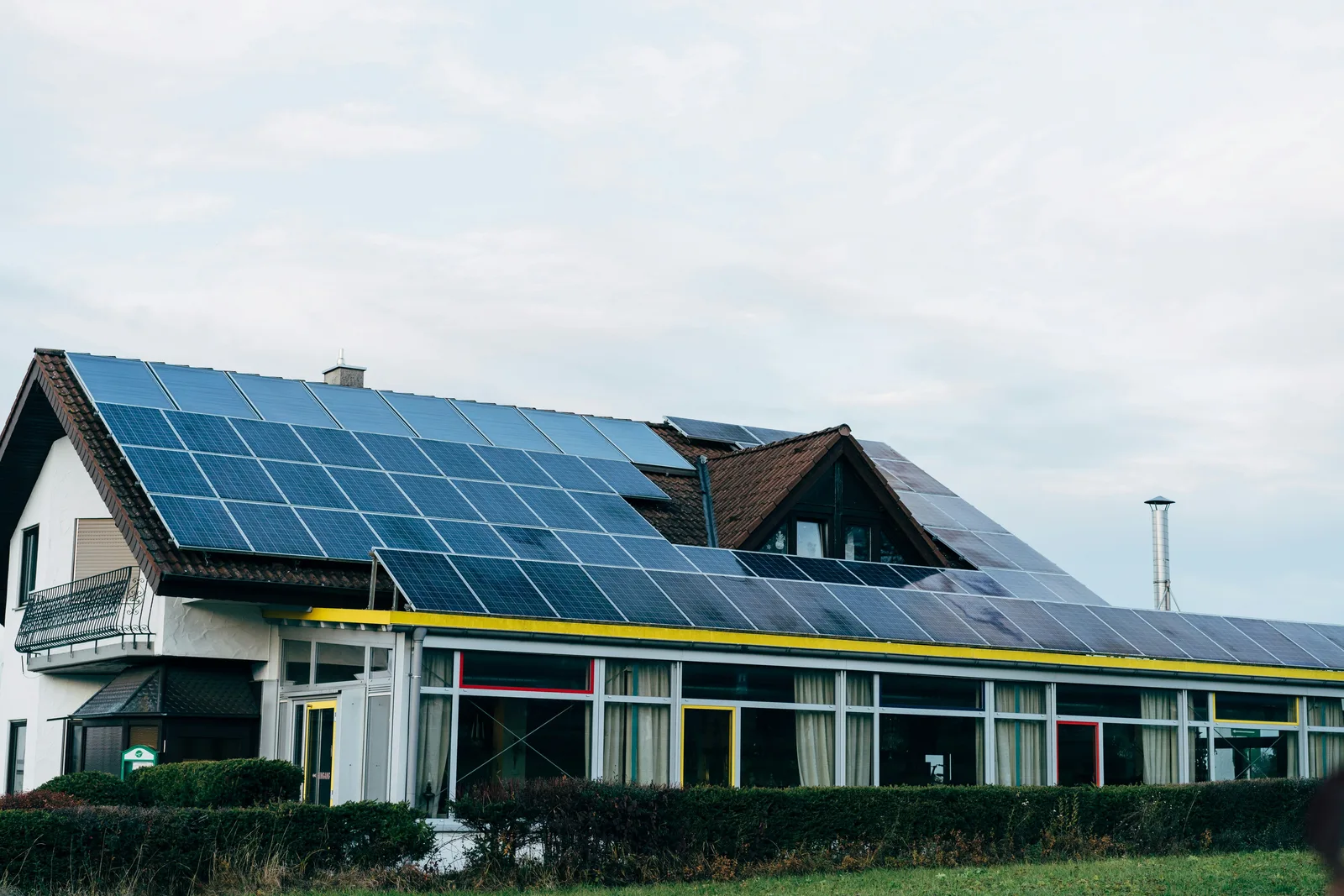
Meublé de tourisme: DPE and energy rules in 2026 (loi Le Meur)
If you let a property short-term in France, 2026 is the year energy performance catches up with you. The loi n°2024-1039 du 19 novembre 2024 — the loi Le Meur — pulls meublés de tourisme (furnished tourist rentals) into the same décence énergétique logic that already governs long-term lets. In communes that regulate change of use, a DPE now conditions the right to rent; class F and G properties are being pushed out; and from 1 January 2034 every tourist let that is not the owner's principal residence must reach class D. On top of that, registration has gone national — the State teleservice is in force since 20 May 2026 — and the taxe de séjour still applies. This guide sets out exactly what the law requires, the dates that matter, which properties are exempt, and how to plan renovations before a deadline — or a fine — forces your hand.
Éco-PTZ for landlords: financing a rental renovation at zero interest in 2026
For a French landlord, a rental rated F or G on the DPE is now a countdown, not just a comfort problem. From 1 January 2025 the most energy-hungry homes can no longer legally be rented, and F-rated flats follow in 2028. Renovating is unavoidable — the real question is how to pay for it without draining your cash. This is where the éco-prêt à taux zéro (éco-PTZ) earns its place: a state-backed, interest-free loan of up to €50,000 over 20 years, open to landlords, with no income condition. This guide walks through the 2026 ceilings, the eligible works and the RGE rule, how the éco-PTZ stacks with MaPrimeRénov and CEE on the same works, the prêt avance rénovation variant, and the tie-in with the déficit foncier and the décence énergétique deadlines. Figures are drawn from service-public.gouv.fr and France Rénov; treat this as information, not personalised advice, and confirm each figure at the source before you sign.